 While stormwater has always been Osborn’s bread and butter, two recent projects we’ve taken on with Kitsap County highlight a new trend in the future of stormwater facilities. Through distinct yet complementary approaches, these technically advanced projects use water quality treatment improvements as an opportunity to create broader public value. Public agencies are increasingly embracing stormwater parks and community-driven design solutions that maximize environmental performance while enriching the neighborhoods they serve.
At Osborn, these projects create opportunities for creativity and collaboration across disciplines, allowing us to reimagine stormwater infrastructure as spaces that support water quality outcomes while also benefiting the people and communities around them. Through a sustained commitment to water quality improvements, Kitsap County has invested in multiple innovative stormwater projects over the years, with the Silverdale project marking their third stormwater park. This continued leadership reflects a long-term vision for infrastructure that not only improves system performance but also delivers meaningful environmental and community benefits.
Suquamish Regional Stormwater Treatment Facility
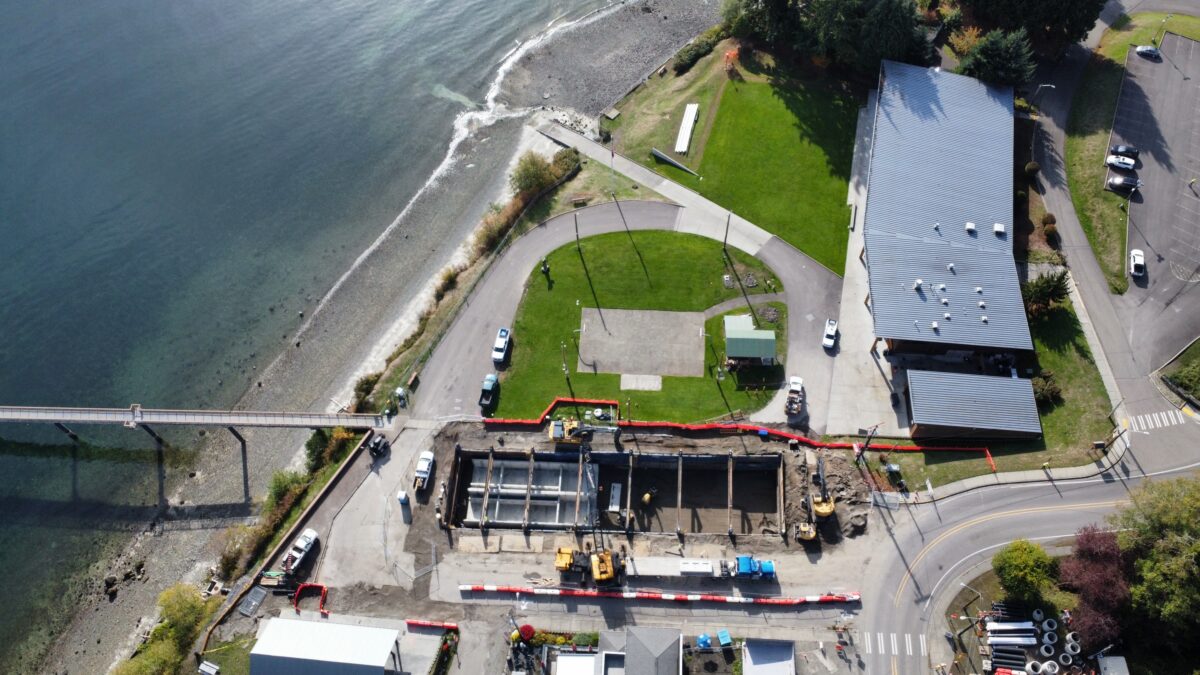
Aerial view of site and underdrain construction. Image courtesy of Oldcastle Infrastructure.
Completed this spring, the Suquamish Regional Stormwater Treatment Facility project is designed to improve stormwater quality before it enters Puget Sound. Osborn led the retrofit of an existing stormwater outfall and the construction of a new underground stormwater facility, serving roughly 182 acres in downtown Suquamish.
Because of this new facility’s proximity to the Suquamish Tribe’s community center, The House of Awakened Culture, the design process considered the Tribe’s functional needs of the space, as well as their deep connection to canoes as cultural heritage and living tradition. What was originally envisioned as a heavily landscaped gathering space remained a large, open paved space with the capacity to accommodate hundreds of canoes and boats.
Because of this, stormwater needed to be managed below grade, allowing ample room for the Tribe to use this space for events like the Tribal Canoe Journey, an annual summer event where Pacific Northwest tribes paddle from their home waters to a host nation for a week of cultural exchange. This year, dozens of canoes and thousands of pullers are expected, traveling from across the region to share songs, dances, food, and other cultural traditions.
“The Suquamish Treatment Facility is a blueprint for effectively managing stormwater and improving water quality – while maintaining functional spaces that reflect how people actually want to use them,” said Maria Peraki, Osborn’s Water Business Group Lead who led the project through construction. “We’re deeply grateful for the Tribe’s input, and we’re thrilled they’re happy with the result.” Maria is also the Project Manager for the Silverdale Stormwater Park project (see below).
Kitsap Silverdale Stormwater Park
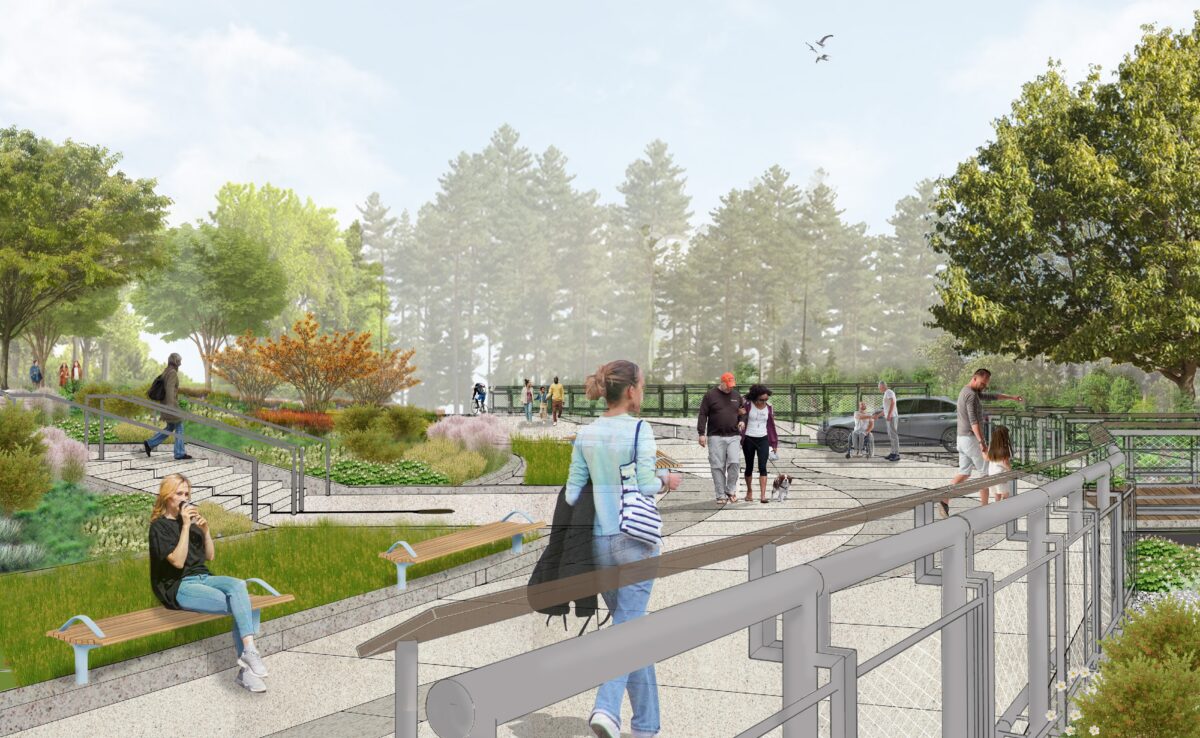
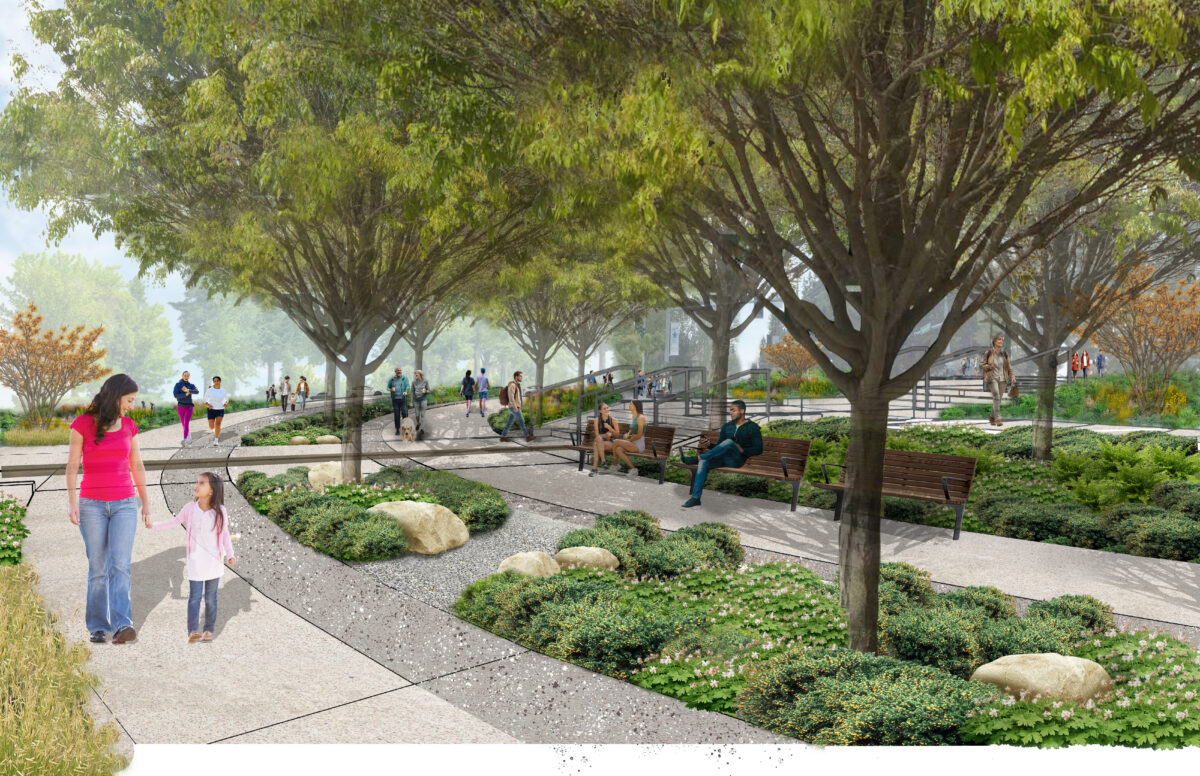
Meanwhile in Silverdale, we’re in the process of designing innovative green stormwater infrastructure that aligns with Kitsap County’s commitment to protect the Salish sea and provide equitable access to open green space, treating stormwater runoff from more than 70 acres before it reaches Dyes Inlet. Slated to begin construction in 2028, the 0.8-acre property intersects commercial and residential zones near a well-traveled thoroughfare. This site was selected in part because there are no other nearby parks serving the local community.
The project will create a public amenity showcasing a state-of-the-art stormwater facility that brings stormwater to the surface, literally and figuratively, by providing educational opportunities to observe stormwater management as it occurs, resulting in a welcoming and distinctive public open space that includes walking paths, viewing platforms, and green space.
Due to the steep slope and arterial intersection at the location, the design includes a large cascading staircase that runs diagonally through the middle of the park, leading to a deck that overlooks bioretention elements with a layered view of the inlet beyond. The interdisciplinary nature of the park is highlighted in the vignettes displayed below, produced by Gauri Patil, an Osborn Landscape Designer.
“We’re achieving two goals at once with these stormwater facilities: Designing true ‘people places’ that provide a green neighborhood gathering space, a space where people actually want to be. At the same time, we’re efficiently treating stormwater runoff,” said Liz Browning, Principal and Practice Lead of Osborn’s Landscape and Urban Design group.
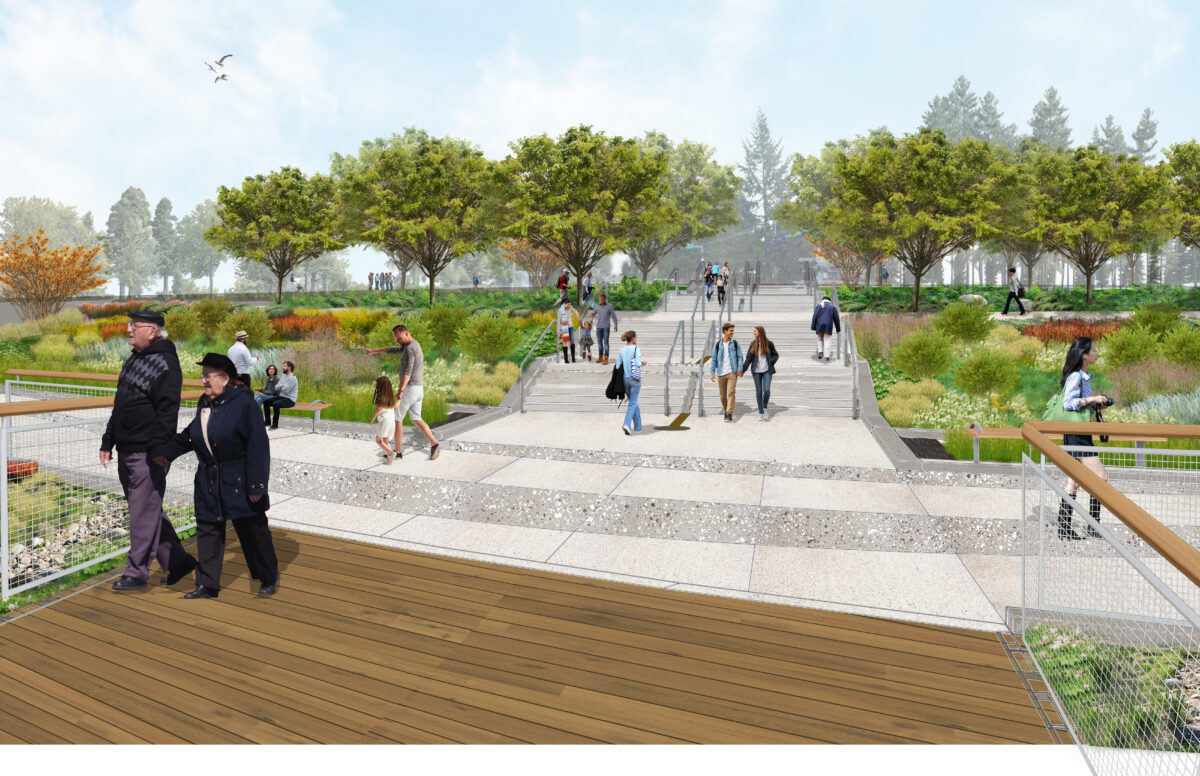
Vignettes showing the blending of public green space and water quality facilities.