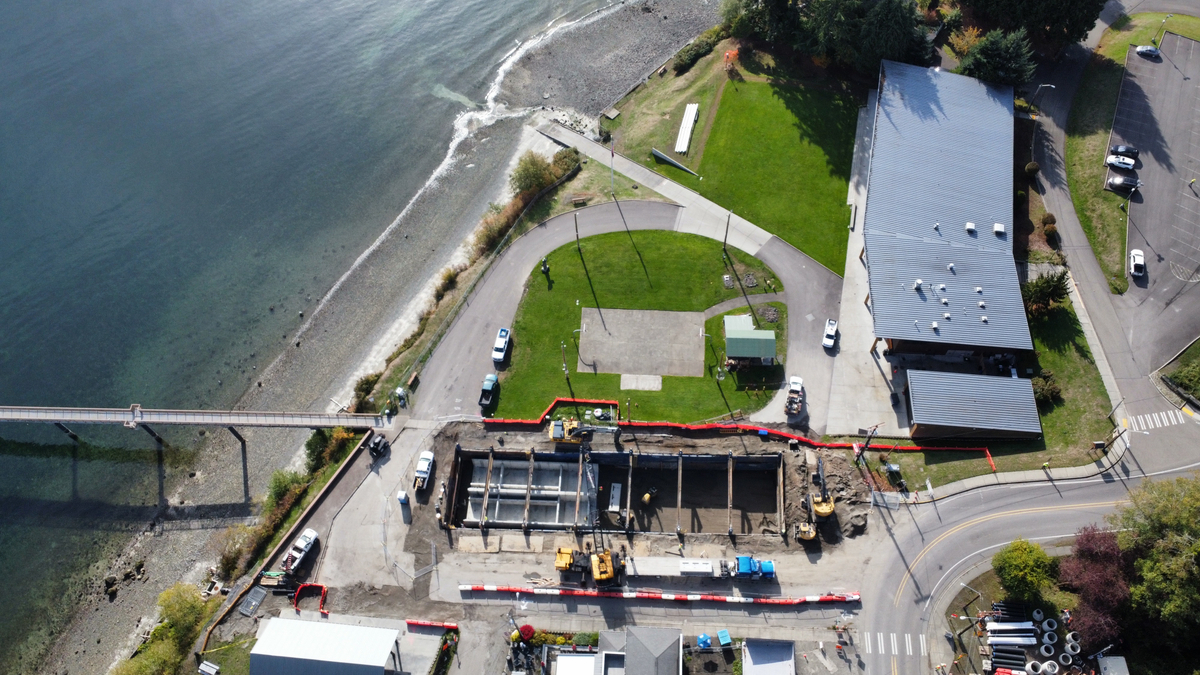
An aerial look at the construction of the Suquamish Regional Stormwater Facility project. Image courtesy of Oldcastle Infrastructure.
Kitsap County’s community-centered regional stormwater solution, designed by Osborn Consulting, was awarded Innovative Stormwater Project of the Year during the PNCW2026 conference for protecting Puget Sound while honoring the needs and character of downtown Suquamish.
As the project’s prime consultant, Osborn provided project management, stormwater engineering, landscape architecture, urban design, technical review, CADD production, and design support through construction.
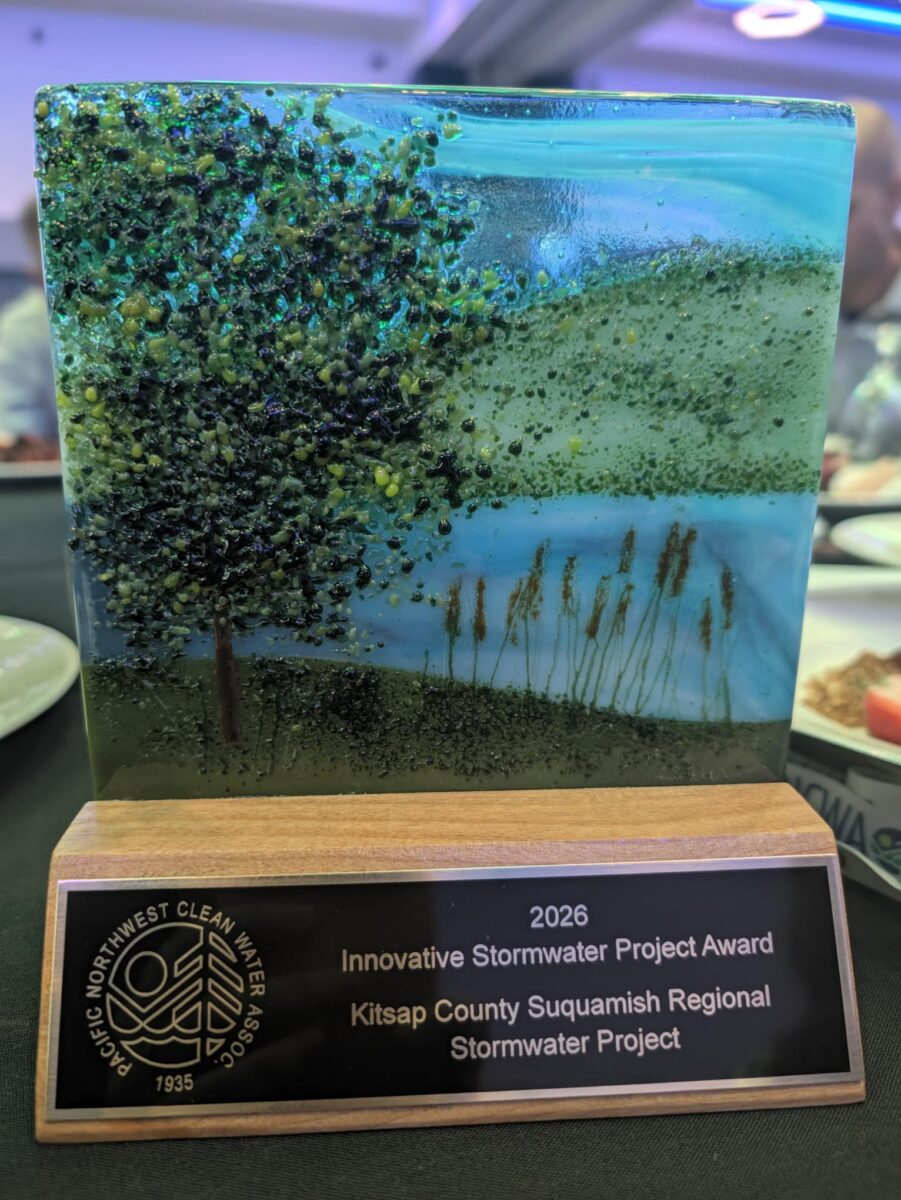
The 2026 Award for Innovative Stormwater Project of the Year.
Developed in partnership with Kitsap County and in close coordination with the Suquamish Tribe, the project provides regional stormwater treatment for runoff from approximately 182 acres of developed watershed in Suquamish. The facility reflects the County’s sustained commitment to water-quality improvements and continued investment in innovative stormwater infrastructure that delivers meaningful environmental and community benefits. By improving water quality before runoff reaches Puget Sound and nearby shoreline waters, the project advances that long-term vision while responding to the unique needs of the Suquamish community.
The project was designed around a challenge that extended beyond stormwater infrastructure. The facility is located near the Suquamish Tribe’s House of Awakened Culture and ceremonial canoe landing, an area with important cultural, community, and waterfront uses. The team developed a below-grade treatment facility that delivers substantial stormwater benefits while helping preserve space for gathering, access, and community activity.
To fit the site’s unique constraints, Osborn partnered closely with Kitsap County maintenance staff and Oldcastle Infrastructure to customize the treatment vault’s geometry and internal configuration. A stepped-down vault design was developed to accommodate challenging site elevations while maximizing maintenance access. The vaults internal design was customized to achieve optimum flow distribution and maintainability. The team also incorporated a baseflow bypass system to prevent nuisance flows from unnecessarily passing through the treatment media, improving long-term reliability and reducing maintenance demands. By tailoring the facility to site conditions, operational needs, and community priorities, the project delivered a maintainable, high-performing regional treatment system that protects water quality while respecting the use of the Suquamish waterfront.